1. The Sensory Environment
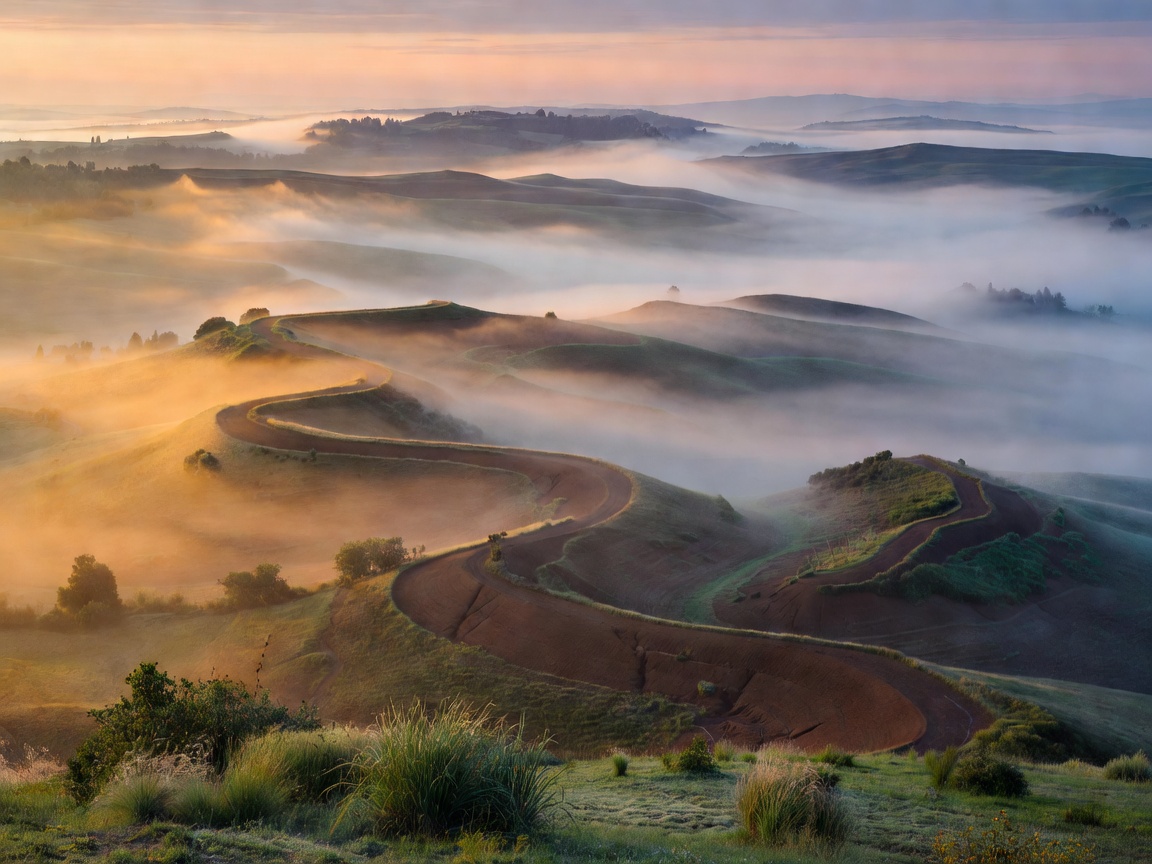
The Val d’Orcia is not merely a scenic countryside; it is a designed philosophical landscape. In the 14th and 15th centuries, the merchants and humanists of Siena restructured the rural valley to reflect an ideal of aesthetic harmony and meditative order.
When standing atop the clay knolls of the Crete Senesi at daybreak, ambient noise drops to an astonishing 22 decibels. There are no overhead flight corridors, no sustained train rumble, and the sparse groves of cypress trees act as acoustic baffles against the Mediterranean wind.
2. Why This Place Heals Neurological Fatigue
Cognitive overload in modern life stems from fragmented visual clutter and relentless artificial frequencies. The Val d’Orcia replaces this with:
- Monochromatic Clay Horizons: The soft ochre and silver-green palette reduces ocular strain and lowers heart-rate variability markers.
- Monastic Rhythms: Places like the Abbey of Sant'Antimo retain their 12th-century acoustic resonance, hosting daily Latin chants that anchor the circadian rhythm.
- Subterranean Thermal Waters: In Bagno Vignoni, natural volcanic waters pool in the central town square, releasing warm mineral steam that envelops visitors in sensory warmth.
3. Curated 4-Day Cadence of Silence
To experience the Quiet archetype without disruption, avoid standard vehicular routes and follow our slow unpaved gravel circuit (strade bianche):
-
DAY 01
Montepulciano to Pienza via unpaved farm tracks
Check into a restored stone farmhouse (Agriturismo) with no television or road frontage.
-
DAY 02
The Monastic Meridian
Walk 12km along the historic Via Francigena to the Abbey of Sant’Antimo. Spend 3 hours in silent contemplation.
-
DAY 03
Thermal Recovery in Bagno Vignoni
Twilight mineral soak in natural hot springs surrounded by Renaissance limestone.
-
DAY 04
The Lunar Crete Senesi
Solitary photography and notebook work among the solitary oak groves of Montalcino.